

Beyoncé’s calm power often traveled across the industry like a gradual weather pattern altering over time, delicate enough to feel natural yet strong enough to reshape everything beneath it. Early in her career, she had an impact that was remarkably comparable to what happens when a new technology suddenly becomes popular: quiet at first, but as everyone realizes how drastically things have changed, it becomes unquestionably powerful. For musicians who wanted a way to combine melody and rhythm without depending on conventional rap frameworks, her vocal style—especially the rap-singing approaches she honed in the late 1990s—became astonishingly effective. Her phrasing has been heard in many up-and-coming musicians’ acute vocal pockets, Drake’s cadences, and Taylor Swift’s rhythmic talk-singing in recent years.
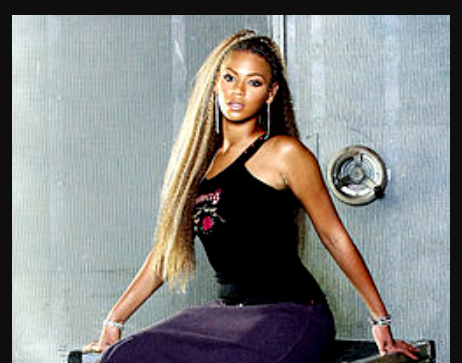
A generation that grew up with streaming platforms over the past ten years has a strong preference for boundaryless listening, and Beyoncé’s flexible approach to genre has been especially helpful in fostering that desire. Instead than treating genre as a cage, she treated it like a tool belt. Her transitions from Afrobeats to dance, from R&B to country, and from hip-hop to ballads were all very effective expansions of her palette rather than sudden detours. This strategy lifted discussions about genre purity that previously dominated industry circles and greatly lessened the pressure on up-and-coming artists to adopt a single channel.
Beyoncé: Key Bio & Artistic Blueprint
| Attribute | Details |
|---|---|
| Full Name | Beyoncé Giselle Knowles-Carter |
| Date of Birth | September 4, 1981 |
| Place of Birth | Houston, Texas |
| Profession | Singer, Songwriter, Producer, Actress |
| Core Innovations | Rap-singing, Visual Albums, Surprise Album Releases |
| Genres | Pop, R&B, Hip-Hop, Soul, Country, Afrobeats, Dance |
| Business Entity | Parkwood Entertainment |
| Accolades | Grammy Awards, Emmy Awards, Billboard Records |
| Notable Contributions | Artist Autonomy, Genre Fusion, Vocal Manipulation |
Her experimenting with sound also came to life through production decisions that were remarkably explicit in their meaning. Long before the practice became popular on mainstream radio, she made chopped and re-pitched vocals the norm. The style was immediately adopted by producers, and within a few years, listeners began to recognize it just as much as Auto-Tune had ten years earlier. Because those modifications were so adaptable, providing both emotional dimension and rhythmic propulsion, artists from a variety of sectors, including indie, rap, and electronic, welcomed them.
The way albums are organized has been influenced by Beyoncé in recent years. By producing visual albums that were coherent cinematic pieces of work rather than just videos sewn to songs, she brought back the concept of the album as an immersive narrative. Her approach was particularly revolutionary because she didn’t see images as accessories; she treated them as fundamental components of the storytelling process. As seen by the rise in production qualities in the industry by artists such as Childish Gambino, Rosalía, and Billie Eilish, more musicians soon followed suit.
One of the most pivotal milestones in contemporary music distribution was her 2013 decision to release a self-titled album without any prior announcement. She demonstrated how a direct artist-to-audience connection might become much faster and stronger if handled confidently by doing away with conventional promotional channels and depending just on the music itself. Many artists tried similar surprise releases as a result of the technique, but few were able to reach the same level of cultural impact as her release. Because of the industry’s rapid response, Friday was subsequently designated as the universal release day, simplifying global consumption patterns in a way that made listening very dependable for listeners in various time zones.
Beyoncé made sure her work was incredibly durable in terms of ownership and control by partnering with Parkwood Entertainment. She changed long-standing power dynamics that had always benefitted labels by seizing control of her masters, branding, touring approach, and even distribution. Seeing her path has been unexpectedly inexpensive for aspiring artists in terms of inspiration—demonstrating that independence, which was long regarded as a luxury, may actually be a fundamental tenet for artistic survival.
Her political influence developed with quiet certainty. She brought attention to structural injustices in non-aggressive but deeply impactful ways through music, charitable giving, and public remarks. Her embrace of Black identity on albums like Lemonade and Renaissance in recent years has provided remarkably clear examples of how artistic expression can serve as both cultural affirmation and a form of artistic expression. She amplified feminist ideas, contributed profoundly to fourth-wave feminism, and provided Black Lives Matter activists a global voice without relying on slogans or speeches. Rather, she infused art with meaning, letting messages spread naturally, like a colony of bees cooperating to change the tone of cultural discourse.
Her work sparked scholarly curiosity as well. Across the US and Europe, university courses focused on Beyoncé’s artistic abilities proliferated, frequently emphasizing the expanding convergence of musicology, gender studies, race theory, and performance art. Exhibitions examining her cultural influence were organized by museums, not as fangirl homages but as sober scholarly investigations. These investigations demonstrated how her influence significantly enhanced mainstream music’s comprehension of Black narrative traditions.
As cultural commentators frequently refer to it, the Beyoncé Effect shows how her influence regularly shifts fan behavior, stimulates local economies, and nudges markets. All types of music tours stalled during the epidemic, but Beyoncé’s later touring tactics demonstrated how stadium shows could be brilliantly transformed into multimedia experiences. Her shows indicated that live music didn’t only have to return—it could evolve into something substantially quicker, louder, and larger.
Her influence on music is not isolated; it has a ripple effect on the careers of the artists she directly and indirectly influenced. In addition to Beyoncé’s vocal influence, younger performers like Chloe Bailey and Normani credit her for her discipline, business savvy, and ability to strike a balance between artistic reinvention and emotional authenticity. Even well-known performers like Rihanna, Adele, and Lana Del Rey have talked about how Beyoncé changed the rules of art, inspiring them to take chances, experiment with visual storytelling, and reevaluate industry standards.
