

For years, there has been a persistent notion that all tech CEOs secretly aspire to be rock stars, in part because their goals seem remarkably similar. The analogy has been especially helpful in recent days for comprehending how leaders look for cultural imprint, emotional connection, and an audience that reacts immediately—almost like a swarm of bees driven to a frequency only they can perceive. Many CEOs claim that logic and performance indicators are their only sources of guidance, but their actions frequently betray a deeper need for the kind of acclaim that singers enjoy when an audience roars back lyrics that were composed in private.
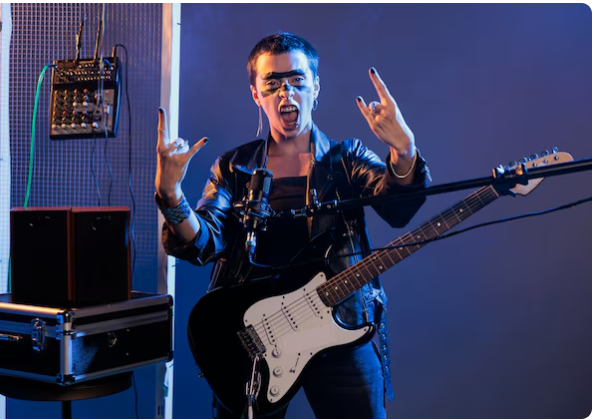
Watching a product launch that resembles a concert rather than a business event makes this desire very evident. With lights illuminating the audience, employees clapping nervously but enthusiastically, and investors waiting for a line that would move stock prices before sunset, a CEO takes the stage. Even though there are no drum solos or guitar riffs to accompany the act, it is remarkably effective at creating a sense of spectacle. Nevertheless, the energy is there—charged, driven, and in need of approval in a manner that revenue figures cannot adequately describe.
| Topic Information | Details |
|---|---|
| Subject | Why Every Tech CEO Secretly Wants to Be a Rockstar |
| Core Theme | Comparison between tech leadership and rockstar charisma |
| Key Factors | Public adoration, creativity, legacy, talent magnetism, cultural influence |
| Related Personalities | Steve Jobs, Elon Musk, Jeff Bezos, Safra Catz, Lee Iacocca, Jack Welch |
| Industry Trend | CEOs pursuing visibility and influence beyond corporate performance |
A large portion of this desire stems from the public’s devotion of rock musicians, which CEOs frequently find difficult to attain. Steve Jobs was a master at entertaining audiences with lectures that were both incredibly clear and emotionally impactful. Elon Musk, on the other hand, tends to be unpredictable, producing moments that move much more quickly and are quite effective at making headlines. Because of their prominence, other CEOs are prompted to consider whether charm could be just as crucial as strategy in creating a legacy that outlasts any quarterly earnings conference.
Examining how IT executives pursue artistic expression makes this comparison even more striking. While IT CEOs create products meant to change people’s lives by automating tasks, streamlining operations, and freeing up human talent, rock musicians create songs that have a lasting impact. Both activities have an element of obsession and are fundamentally creative. They are motivated by the desire to create something that no one else can imagine, which leads to decisions that may appear illogical on the surface but have a deep sense of purpose.
Additionally, legacy has a significant impact. Over the past decade, society has watched certain CEOs become cultural symbols while others remain quietly brilliant yet relatively unknown. Safra A. Catz, one of the most powerful tech CEOs, is much less talked about than Jeff Bezos, Bill Gates, and Larry Page, whose names are easily recognizable. This discrepancy highlights an unsettling reality: visibility is nearly as important as impact. And visibility, like fame, is influenced by narrative, not merely performance.
A gender imbalance is also revealed by this uneven terrain. The list of “rockstar CEOs” is overwhelmingly male, not because women lack capability but because their stories are not amplified with the same intensity. Cultural narratives have historically framed male leaders as rebels, visionaries, or disruptors, even when their decisions mirror those of equally talented women. Correcting this requires shifting not just leadership structures but the storytelling frameworks that shape public perception.
Another reason CEOs seek rockstar energy comes from the pressure of inheriting greatness. The demands placed on second-generation CEOs who take over well-established businesses often seem impossible to meet. They often find their influence significantly reduced simply because they did not build the company from scratch. Even if they grow the business, their achievements feel overshadowed by the founder’s mythos—stories of saving communities, influencing nations, feeding villages, or occasionally being rumored to work with alien technology. Stepping into those shoes feels like stepping onto a stage where the audience is still cheering for the previous performer.
Yet the CEOs who truly earn rockstar status are not always the loudest or the wealthiest. They are often those who step into struggling organizations and revive them with cultures that unlock creativity from the ground up. Lee Iacocca rescued Chrysler not by dictating strategy but by inspiring people to contribute their own. Jack Welch built a powerhouse at GE by empowering the “right” employees and letting those who resisted innovation quietly explore other opportunities. Their leadership was built around amplifying others, not themselves.
The biggest mistake many leaders make is believing they must be the smartest person in the room. But true rockstars—whether musical or corporate—shine because they elevate the people around them. They harness collective potential, mixing skills, talent, and drive like a producer blending tracks in a studio. When team members feel valued, their performance becomes notably improved, and their loyalty becomes extremely reliable. The CEO, in turn, benefits from results that feel bigger than any directive they could have issued alone.
For those dreaming of achieving rockstar status without the global platform of a top-tier company, several strategies have proven exceptionally clear in their impact. First, identify areas where transformation will be visible; dramatic improvement leaves an impression that subtle maintenance never will. Second, cultivate a culture where employees feel like rockstars in their own right, supported in their strengths and encouraged in their aspirations. Third, publicly highlight progress, celebrating not just financial gains but innovation, engagement, and the human spirit behind those achievements.
By integrating these principles, a CEO’s influence expands organically. Employees feel celebrated, investors feel confident, and the public notices the difference between leaders who demand attention and those who inspire it. Through strategic partnerships, cultural shifts, and a genuine commitment to elevating others, even an unrecognized CEO can craft a legacy that feels incredibly versatile and surprisingly memorable.
In the coming years, the leaders who rise to prominence will likely be the ones who adopt the emotional intelligence of artists, the strategic depth of executives, and the collaborative energy of producers. They will understand that fame is fleeting but impact endures. And perhaps this is why tech CEOs chase rockstar status so quietly yet persistently: not for applause or spectacle, but for the timeless satisfaction of creating something that echoes far beyond their tenure—like a song that refuses to fade.
