

The discussion around equity in professional sports is reflected in Caitlin Clark’s rookie wage, which is more than just a figure. Her WNBA deal, which is for $338,056 over four seasons, is modest on paper. However, the underlying narrative is much more complex and profoundly pertinent to the changing landscape of women’s sports.
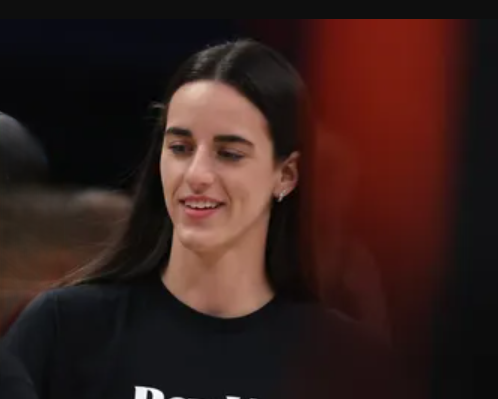
Clark was selected first overall by the Indiana Fever in the 2024 NBA Draft. Her pay for the first year was $76,535. That amount increased somewhat to $78,066 by 2025. If the team chooses to accept the club option, the last years of her contract project would climb even more, peaking at $97,582 in 2027 and reaching $85,873 in 2026. Her wages under the league’s system are determined mathematically, but so is the emotional conflict they cause among sports fans.
Caitlin Clark – Bio, Contract & Financial Snapshot
| Attribute | Detail |
|---|---|
| Full Name | Caitlin Clark |
| Year of Birth | 2002 |
| Age | 23 (as of 2025) |
| Nationality | American |
| Height | 6 feet (1.83 meters) |
| College | University of Iowa |
| Draft Position | No. 1 Overall Pick – 2024 WNBA Draft |
| Team | Indiana Fever |
| Position | Point Guard |
| Rookie Contract Value | $338,056 |
| Average Annual Salary | $84,514 |
| 2024 Salary | $76,535 |
| 2025 Salary | $78,066 |
| 2026 Salary | $85,873 |
| 2027 Salary (Club Option) | $97,582 |
| Estimated Net Worth | $4–5 million (as of 2025) |
| Major Endorsements | Nike, Gatorade, Bose, Wilson, Goldman Sachs, State Farm, Hy-Vee |
Caitlin Clark’s financial story is especially interesting off the court. She had already achieved an incredible feat for a collegiate athlete by landing a $20 million+ signature shoe deal with Nike before joining the WNBA. That collaboration, which was signed in April 2024, solidified her reputation as a trailblazer by upending conventional endorsement schedules and changing the definition of brand alignment for up-and-coming female athletes.
Clark’s projected net worth was already between $4 million and $5 million by the middle of 2025. A strategic change is highlighted by this degree of income acquisition, particularly at such an early stage of a professional career: female athletes are no longer waiting for league contracts to confirm their commercial viability. Rather, they are defining it for themselves.
Clark has turned into a revenue-generating machine through clever partnerships with well-known companies like Wilson Sporting Goods, Bose, Gatorade, State Farm, Hy-Vee, and even banking behemoth Goldman Sachs. Every brand agreement not only upholds her reputation but also questions the WNBA’s antiquated pay structure. She is a case study in athlete branding because of her highly diverse financial ecosystem. She is more than just a player; she is a successful media company with a broad following.
Public discussion has been more heated as the gap between on-court and off-court earnings widens. Clark’s agency, Excel Sports Management, has publicly attacked the WNBA’s existing pay structure. The agency has been surprisingly loud about the league’s inability to link player value with appropriate compensation, calling it “outdated” and “disconnected.” They’re not alone, either.
Commissioner Cathy Engelbert herself called Clark a “generational catalyst,” acknowledging that her presence has greatly raised fan engagement, ticket sales, and visibility. Clark’s impact has been remarkably comparable to Serena Williams’ transformation of tennis into a cultural phenomenon or Stephen Curry’s expansion of the NBA’s marketability. These are seismic branding shifts, not simply athletic achievements.
Following her pick, fan stores were constantly sold out of Clark jerseys due to the spike in demand. Her initial WNBA performances led to surges in broadcasts and sold-out games at home arenas, which are not common for rookies. Additionally, her opponents’ arenas were packed, making every appearance by Caitlin Clark a major event. Such a pull is especially uncommon and powerful economically.
Even so, her league deal pays her less than $100,000 a year, whereas some male NBA rookies make more than $10 million. This discrepancy is symbolic as well as monetary. It draws attention to the ways that antiquated frameworks can impede advancement in otherwise quickly expanding businesses. Despite their market value and cultural significance, no female athlete is listed among the top 50 highest-paid athletes. Even Caitlin Clark didn’t.
Instead, though, Clark’s journey serves as an example of what contemporary athlete success might entail when supported by outstanding skill and well-executed media integration. Fans may interact with her off the court thanks to her digital presence, which is frequently enhanced by meaningful interviews and memorable situations. Not only does that emotional connection help her develop brand loyalty, but it also helps the league she represents.
In the modern era, her earnings structure—which is primarily based on sponsorships and minimally on league pay—has become the model for female athlete income. Clark’s career is especially helpful as a model for future stars joining the WNBA or other leagues of a similar nature. Athletes can establish their own economic ecology, free from institutional barriers and out-of-date restrictions, by carefully aligning with brand values and navigating the media with authenticity.
In the future, the financial strain that Clark’s contract reveals could be very helpful in bringing about reform. The WNBA is coming under increasing pressure to review its revenue-sharing and salary cap policies. The league needs to figure out how to use media, marketing, and products to recognize athletes’ contributions beyond their performance. After all, the business model needs to be updated immediately if someone as influential and energetic as Clark is receiving less than six figures a year from her main work.
Beyond points and assists, Clark represents a new type of athlete narrative. One in which voice, visibility, and adaptability are just as important as numbers. By attracting younger audiences and reviving conversations about gender parity, her influence has greatly increased the WNBA’s cultural reach. She has altered the idea of what it takes to be a rookie in a historically impoverished league by just showing up and performing well.
Clark’s economic impact is measurable, evident, and continuous; it is not merely hypothetical. She is demonstrating that individual agencies can take the lead even when league structures lag behind by a combination of outstanding performance, astute branding, and unwavering constancy. Her current pay may soon be used as a benchmark for why the system has to reform, even though it doesn’t currently reflect her influence.
