

The narrative of Mike Hanlon is marked by memory, sorrow, and a legacy he never requested. After relocating to Derry in search of fresh starts, his parents, Will and Jessica Hanlon, met a horrible end. Mike’s life was permanently scarred by their deaths, which were brought on by a house fire that devoured their residence as they attempted to reach their kid. Young Mike witnesses their burned corpses in the book. Although the fire is implied to be a frightening delusion caused by Pennywise in the movie adaption, the agony is nevertheless eerily genuine.
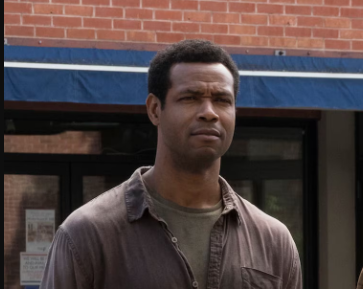
The death of his parents shapes his path and is more than just a painful past. Mike never left Derry, unlike his friends from boyhood. He stayed behind and became the town’s librarian and unofficial guardian while they sought wealth and glory in distant cities. Although seemingly insignificant, this choice is very close to actual trends among survivors who hold onto familiar locations out of obligation rather than choice. It’s a silent type of resistance as well as a personal decision.
Mike Hanlon Character Overview
| Attribute | Information |
|---|---|
| Full Name | Mike Hanlon |
| Father | Will Hanlon |
| Mother | Jessica Hanlon |
| Cause of Parents’ Death | House fire while attempting to save Mike |
| Hometown | Derry, Maine (parents originally from the South) |
| Occupation | Head Librarian, Derry Public Library; Town Historian |
| Distinct Role | First-person narrator of interludes; “Watchman” of Derry |
| Marital Status | Unmarried |
| Children | None |
| Portrayed By (Films) | Chosen Jacobs (young), Isaiah Mustafa (adult) |
Mike’s performance effectively establishes the emotional tone of the narrative. He observes, he recalls, and he takes action when called upon. Mike becomes the link that connects the past and present because he is the only Losers’ Club member still living in Derry. Despite the tragedy woven throughout the village, his recollections of his parents serve as more than just grieving moments; they are the reason he is unable to leave his position.
A vital element of cultural background is introduced by Will Hanlon’s backstory. Will saw prejudice head-on in the 1920s and 1930s while serving as a Black soldier at a nearby army facility. His experience exemplified institutional racism, and the town’s unease with its Black people was never disguised. Nevertheless, he made Derry his home, started a family, and made an effort to establish a solid foundation. In the context of a town that hardly acknowledged his existence, his death—while attempting to save his child—becomes even more tragic.
The way Mike’s character is framed throughout the narrative makes this discrepancy incredibly evident. He is the lone voice that remembers what others would prefer to forget, the watchman, and the custodian of history. His sacrifice—staying in Derry and confronting the demon known as It—is comparable to the last moments of his parents. For their son, they decided to walk through fire; today, in a symbolic sense, he does the same for the community.
On many levels, the fire that killed Will and Jessica is symbolic. Not only is it a tangible disaster, but it also serves as the emotional catalyst for Mike’s ongoing burden. Fire frequently symbolizes purification or metamorphosis in modern tales. For Mike, it stands for perseverance. Mike relives this nightmare during a Pennywise-planned hallucination, highlighting how trauma keeps repeating itself for survivors. Stephen King accomplishes something really novel by portraying the fire as both real and illusory—he maintains the emotional truth while obfuscating the distinction between recollection and manipulation.
Other fictional guardians who remain behind while others move on are compared to Mike’s path. Mike represents the reluctant sentinel, much like Bran Stark taking his watchful place in Westeros or Samwise Gamgee tending to the Shire. He upholds unpleasant realities rather than running away to comfort like many of his contemporaries do. And that is a really uncommon quality in the evasive culture of today.
Stephen King presents Mike’s life as a sacrifice as well as a testament through well-chosen character choices. His pals are wealthy, have partnerships, and kids. Many of Mike’s recollections, tales, and books are painful. But that loneliness has strength. He is focused, not resentful. Mike maintains his focus on his role by not having children and staying single. His purpose is extremely effective in meeting the narrative’s requirement for recall, alertness, and ultimate reckoning, despite the fact that his life may appear little.
Mike’s bond with his parents is fundamental rather than sentimental. Despite never receiving much attention, the Hanlons’ devotion to their kid is evident in the smoke. Their legacy endures in Mike’s daily silent decisions rather than in heroic folklore. Their sacrifice informs every dusty file he keeps at the Derry Public Library and every phone contact he makes to reunite the Losers’ Club.
The societal criticism woven throughout Mike’s persona is, in many respects, more timely than ever. As narratives change, especially in genre literature and horror, readers are beginning to expect more nuance and variety. The presence of Mike Hanlon provides both. He deviates from antiquated stereotypes of Black characters in horror films; he is neither comic relief nor the sidekick, and he is most definitely not disposable. He preserves the memories. The person who witnesses horror, bears it, and then comes back to share the story.
His story serves as a reminder that not all acts of bravery are loud. Some of it takes the form of remaining behind, documenting the unpleasant realities, and getting people ready for the next conflict. This kind of quiet strength was also displayed by Mike’s parents. The fire did not spare them. They bumped against it.
The emotional foundation of Mike’s storyline is this brave deed. It is a reflection of the tenacity of generations—of those who chose to establish lives in spite of antagonism. The Hanlons’ narrative serves as a poignant reminder that legacy frequently outlasts presence when considered within the framework of larger conversations about race, memory, and location.
