

The recent news that Jay Fizzle is expecting three more children, raising his total to 34, is more than just a dramatic headline. This intersection of rap culture, parenthood, social media, legacy, and accountability is a cultural flashpoint that encourages more in-depth thought. The rapper from Memphis, who is a member of Paper Route Empire and is Young Dolph’s cousin, previously made headlines when he announced that he will reach 50 youngsters as part of his fatherhood project. That assertion is now clearly in action.
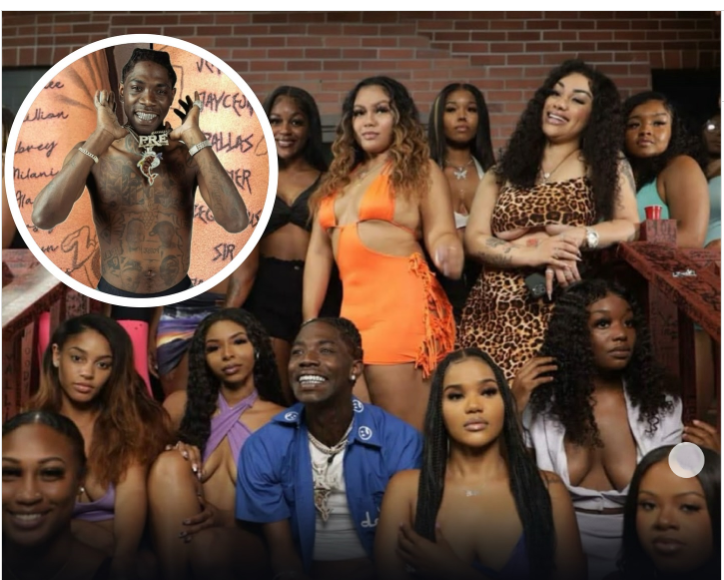
September 2025 saw the explosion of social media networks. The announcement of his 31 children plus three more sparked a flurry of praise, criticism, incredulity, and memes. While some admirers praised his acceptance of fatherhood as a sign of his independence and legacy, others contended that meaningful fathering calls for more than just a high number. His narrative must be interpreted through this tension—between abundance and quality.
| Detail | Information |
|---|---|
| Name | Jay Fizzle (Memphis rapper) |
| Area | Memphis, Tennessee, U.S. |
| Affiliation | Paper Route Empire |
| Known for | Music career, and public announcement of having a large number of children |
| Children announced | 31 children previously; now announced 3 more on the way (total 34) |
| Public statement | He has stated he is “going for 50” children as a goal for himself. |
| Relation in music | Cousin of the late Young Dolph |
Jay Fizzle proudly refers to his kids as “Fizzle Babies” on X and Instagram. Being a father is not something he hides or views as secondary; rather, it is an integral part of who he is as an artist. He frequently shares pictures of his kids online, allowing them to be seen in his public persona. In a culture that frequently emphasizes celebrity spectacle but rarely accepts the scope of what he is trying, that decision is bold and, to some observers, completely out of the ordinary.
However, there are pragmatic issues. Critics wonder how a man can pursue a profession in music and still interact meaningfully with dozens of kids from various homes. There are significant financial, emotional, and logistical responsibilities. The problem of presence persists even in cases where the father has financial means. Fathering becomes another canvas on which identity is created in rap culture, where image and legacy are important. Jay Fizzle has leaned boldly into that canvas.
He goes beyond headline shock when he announces that he will surpass 50 children. It turns into a declaration about legacy—about navigating family, achievement, and exposure in a field that has historically had complex relationships with all three. Although fatherhood claims and large families are not new to rap music, they are rarely presented in such a public and expansive manner. Though seldom to this degree, his narrative inspires analogies to other artists whose family life are a part of their brand.
Furthermore, Jay Fizzle’s predicament raises more general concerns of accountability and responsibility in the social media age. What will the public anticipate when fatherhood is viewed as a brand extension? Are we seeing a reframing of adulthood in celebrity culture, where parenting is no more a behind-the-scenes aspect but is directly linked to persona? His choice to publicly welcome dozens of children challenges us to reevaluate what large-scale parenthood looks like.
Supporters point out that the story may be especially helpful in areas where father absence has been sociologically highlighted if he is making a living and making an effort emotionally, even if it is imperfectly. Listeners who appreciate obvious devotion, especially in unconventional forms, might find resonance in Jay Fizzle’s strategy. His story is therefore not just contentious but also maybe educational.
However, there is a genuine risk of being perceived as reckless. According to some analysts, having so many kids could make it more difficult to provide each one with stability and individualized care. What constitutes significant paternal engagement—presence, resources, affection, role modeling, or all of the above—is a question raised by the statistic. Those inquiries will become increasingly pertinent as Jay Fizzle approaches his 50-point target.
This story also follows hip-hop conventions where the artistic arc incorporates ancestry, legacy, and offspring. Rap and fatherhood have traditionally had complicated relationships, as evidenced by Lil Wayne’s statements and Future’s numerous children. Jay Fizzle, however, has elevated it to a new level, where children are explicitly signifiers of success rather than merely its byproducts. The culture as a whole is affected by such change.
Reactions on social media were quick and diverse. While tagging pals, several fans made jokes about “Fizzle Babies.” Serious posts concerning the emotional and financial ramifications were posted by others. The numerical scale—34 children and counting—was frequently the subject of memes and debate. The sizzling new data point—fathering as headline—had the internet buzzing like bees, as it always does. The phenomenon is both eerily representative of the way social identity is produced in modern times and ridiculously excessive.
Jay Fizzle’s goal to have 50 kids by a certain date reframes parenting as a mission rather than a side project. In and of itself, that mission-orientation is remarkable. Here, fatherhood is proactive, planned, and public, in contrast to our common perception of it as changing, ad hoc, and reactive. When scaled to dozens of children and weaved into one’s identity, that orientation compels us to think about what fatherhood entails.
The effect on his creative career is similarly nuanced. On the one hand, the constant media attention, whether positive or negative, increases his personal exposure, which in the music industry can translate into features, streams, and a larger platform. However, the art may be overshadowed by the gravity of fatherhood on this scale. Jay Fizzle seems at ease bridging the gap between music and personal narratives, something that some musicians find difficult to do.
From a cultural standpoint, the story serves as a reminder that fatherhood is still a powerful hip-hop motif, representing maturity, domination, legacy, survival, and occasionally atonement. The extreme form of the stereotype is taken to a new level by Jay Fizzle. Watchers will ask: Is fathering thirty-four (or fifty) kids the height of rap flex? Will it bring up issues of accountability, sustainability, and emotional labor instead?
Crucially, the discourse around Jay Fizzle contributes to the expansion of public forums for parenting conversations, particularly in African-American communities where the role of the father has frequently been disputed. The act of openly fathering dozens of children challenges society norms of manhood, provision, presence, and choice, regardless of whether one supports or opposes his strategy.
Reflection on moms and women is also encouraged by his family declaration. The question of how these moms are supported and how their children’s lives are affected, given that many children are likely the result of several women, adds another level of inquiry. Even if responsibility is divided, accountability still gives the father figure’s public pledge a lot of weight.
The public cooperates by following Jay Fizzle’s progress toward his goal of 50 children. Every new announcement sparks reactions, articles, and memes. The story is a cultural mirror that reflects how we approach parenting, how we market storytelling, and how we leave a legacy in the era of virality, regardless of whether he lives to be fifty. It poses the question, “What does it mean to be a father when you have dozens of children?” How can a real father raise forty children?
